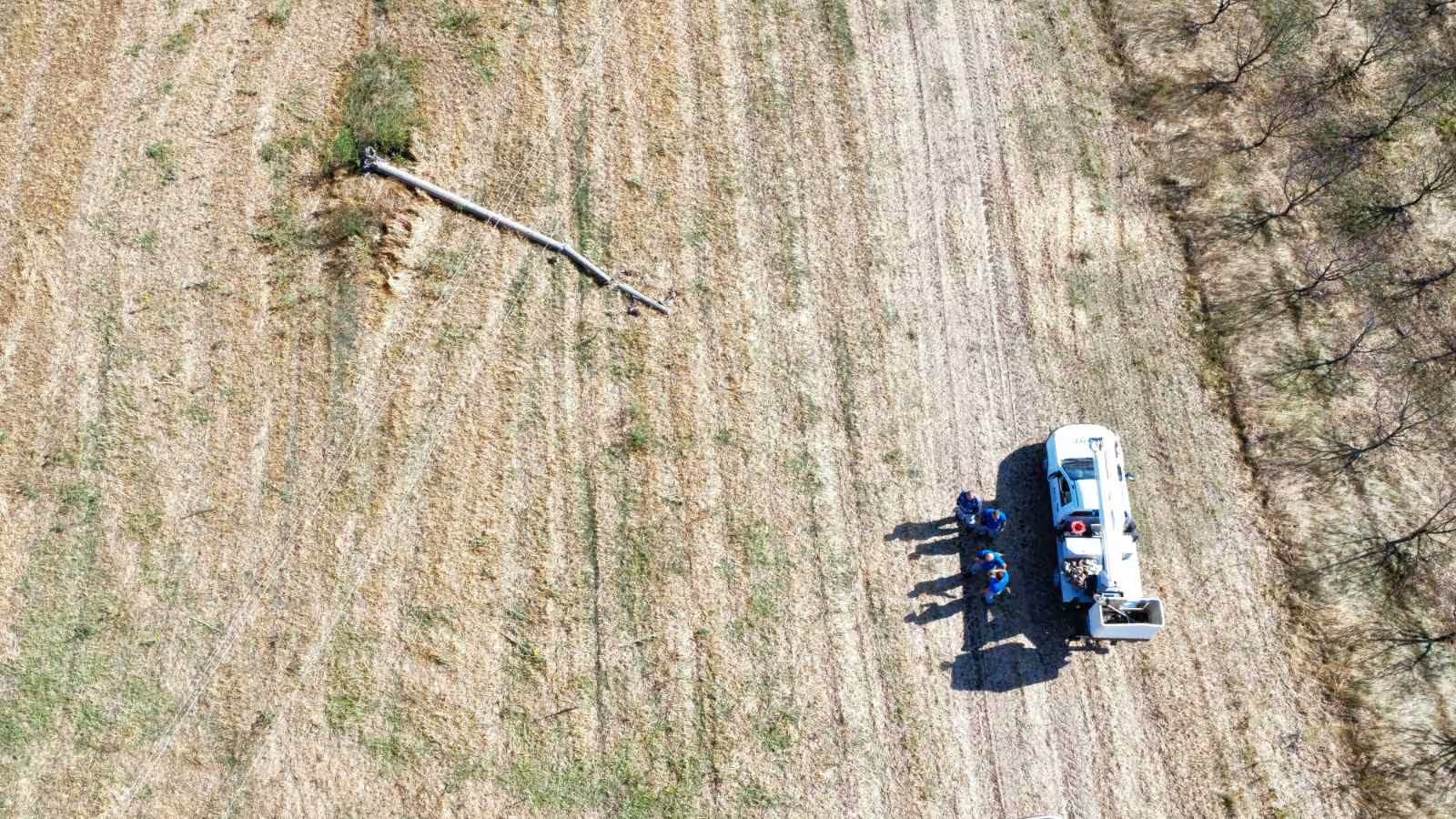
EPP North and the Bulgarian Society for the Protection of Birds have successfully completed the activities on the installation of nesting boxes for the Bluebell and Red-footed Kestrel
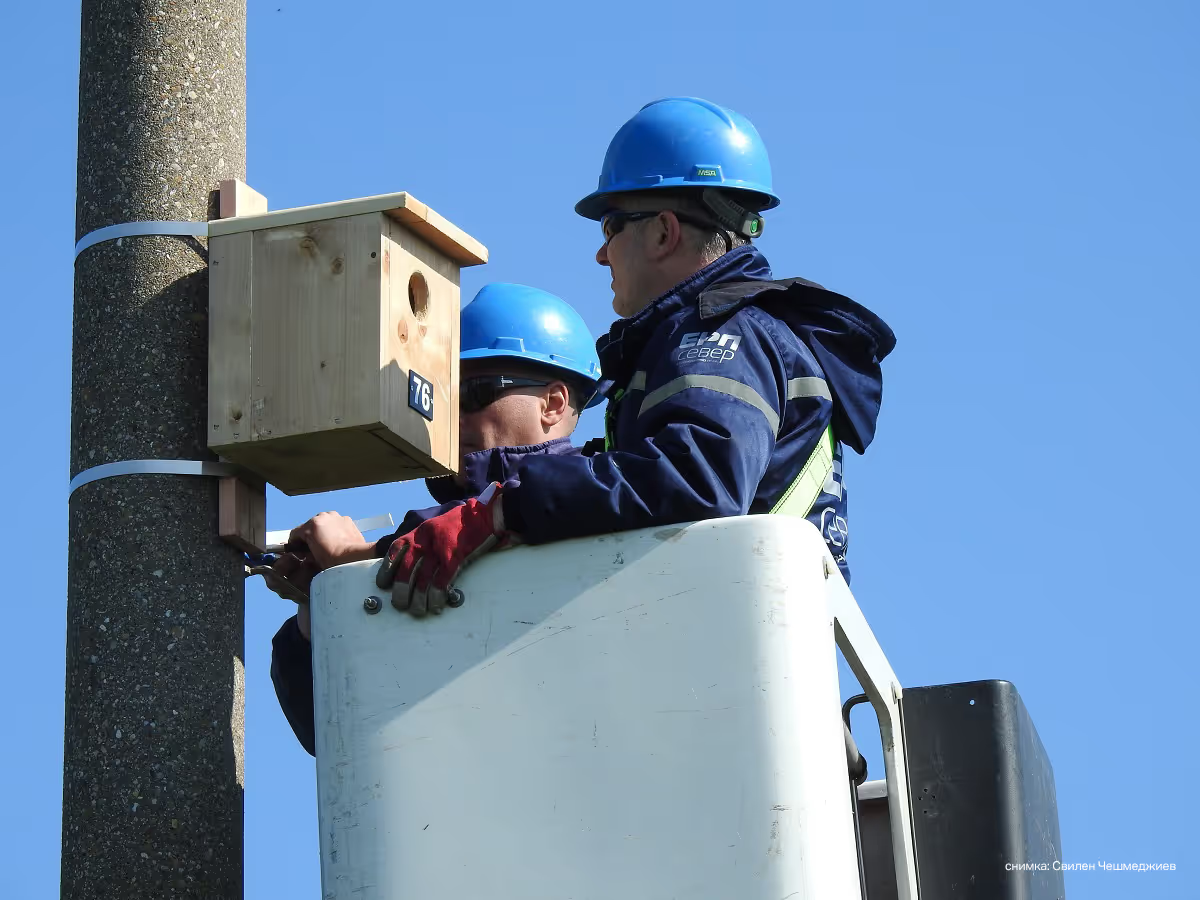

The installation of nesting boxes for bluebell and red-footed kestrels on overhead power lines from the ERP North network was successfully completed in time before the start of the breeding season. Electrical installers of ERP North in cooperation with experts from the Bulgarian Society for the Protection of Birds (BSPB) installed a total of 150 nesting boxes in 40 separate locations in the districts of Veliko Tarnovo, Dobrich, Ruse and Silistra within the LIFE project “Safe Sky for Birds in North-East Bulgaria”.
The installation of nesting boxes for endangered species of birds is done in order to provide safe nesting sites and protect their population. This prevents the construction of natural nests on electrical poles, which are risky for both birds and the normal operation of the electrical network.
The two endangered bird species are expected to return to the nesting range towards the end of April—beginning of May. In the coming months, checks will be carried out on each of the placed nesting boxes to find out how many of them are occupied and what the nesting success is.
The red-footed kestrel is a small falcon that in the last twenty years has suffered a drastic population decline in our country and reached the critical threshold of only a few known pairs in 2022. This is the reason why the species is included in the Red Book of Bulgaria in the category “Critically Endangered”, and in view of its decreasing number in Europe — it is part of the World Red List of the International Union for Conservation of Nature (IUCN).
The bluebell is a protected species that nests in holes in earthen slopes, rock niches, stone walls, tree hollows and in cavities of concrete electric poles. The population of this blue-dyed bird began to undergo a drastic decline in the 50s of the XX century. The use of pesticides in agriculture is the main reason for this.
The project “Safe Sky for Birds in North-East Bulgaria” started at the end of 2022 and lasts 5 years. In the coming months, activities will continue with the isolation of power poles from the EPP North network and the installation of diverters in 28 Natura 2000 project areas and in key corridors between the special protected areas. Priority sections for safekeeping were identified during a special field survey conducted in 2023. The scope of the project includes 16 species of endangered birds in Bulgaria, and the main goal is to prevent their unnatural mortality, as a result of electric shock and collision with overhead power lines.